.png)

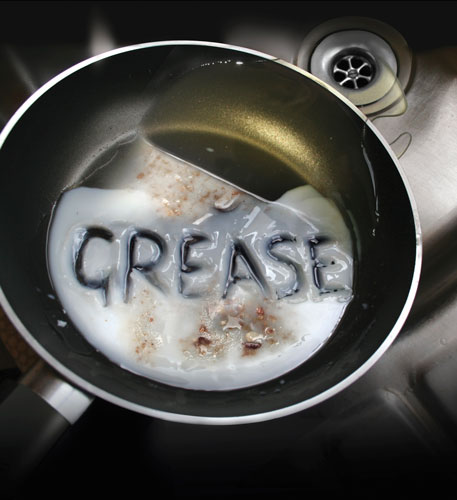
You can have a correctly sized grease trap, a sensible cleaning schedule and still get blockages downstream. The usual culprit is emulsification — the "invisible grease thief" that lets fats, oils and grease (FOG) slip straight past your trap and re-harden further down the drain, where you can't see it until something backs up. Understanding how emulsion forms is the key to stopping it.
What is grease emulsification?
Normally, FOG is less dense than water and floats — which is exactly how a grease trap works, giving the grease time to rise and separate while cleaner water flows out underneath. Emulsification is when that grease is broken into microscopic droplets that stay suspended in the water instead of floating. The mixture looks like cloudy wastewater rather than a greasy layer, so it behaves like water: it passes through the trap without separating, then cools, breaks down and re-congeals in the pipes beyond.
Why emulsified grease beats your grease trap
A grease trap relies on time and buoyancy. Grease has to be able to float to the surface within the few seconds wastewater spends in the trap. Emulsified droplets are too small and too well mixed to rise in that window, so they travel straight through — even a perfectly sized, well-maintained trap can't capture what won't separate. The grease then reappears downstream once the emulsion breaks, building up in the very pipes that are hardest and most expensive to clear.
What causes emulsification in a commercial kitchen
Emulsion is usually the result of everyday kitchen conditions working together:
- Hot water. Very hot wash and rinse water keeps grease liquid and mobile, encouraging it to mix with water rather than separate. Grease that would solidify and float at cooler temperatures stays emulsified while it's warm.
- Detergents and surfactants. Dish soaps, degreasers and cleaning chemicals are designed to lift grease and hold it in suspension. That's great for a clean pan, but it's precisely the mechanism that defeats a grease trap.
- Turbulence and pressure. High-pressure spray, powerful dishwashers and fast, turbulent flow physically break grease into fine droplets — mechanical emulsification on top of the chemical kind.
- Food waste disposers. Macerated food solids add emulsifiers and fine particulates to the flow, making the mixture harder to separate.
How to reduce the emulsion
You can't eliminate emulsification entirely, but a few practical habits make a big difference:
- Scrape and dry-wipe first. Get fats and food off plates, pans and trays into the bin before anything hits the sink. Less grease in the water means less to emulsify.
- Watch wash temperatures. Don't run hotter than you need to. Cooler water helps grease separate rather than stay suspended.
- Control your chemicals. Use dosing systems to avoid over-applying detergents and degreasers, and choose products that are less aggressively emulsifying where you can.
- Size for retention time. A trap with enough capacity and dwell time gives grease a better chance to separate. Check yours with our grease trap sizing tool.
- Consider an automated grease recovery unit. Units like the Big Dipper skim grease continuously, improving capture where emulsion is a persistent problem.
- Train the team. Most emulsification comes down to daily habits at the sink and dishwasher — consistent practice is the cheapest control you have.
The compliance angle
Emulsification isn't just a maintenance headache — it's a compliance risk. Grease that escapes your trap still ends up in the public sewer, and UK law holds your business responsible for what you discharge. Reducing emulsion protects your drains, your downtime budget and your due-diligence record all at once.
If grease keeps reappearing downstream despite a trap that looks fine on paper, emulsification is worth investigating. Magneté helps commercial kitchens diagnose the real cause of recurring grease problems and put the right controls in place — explore our FOG compliance services or book a strategy call.