.png)

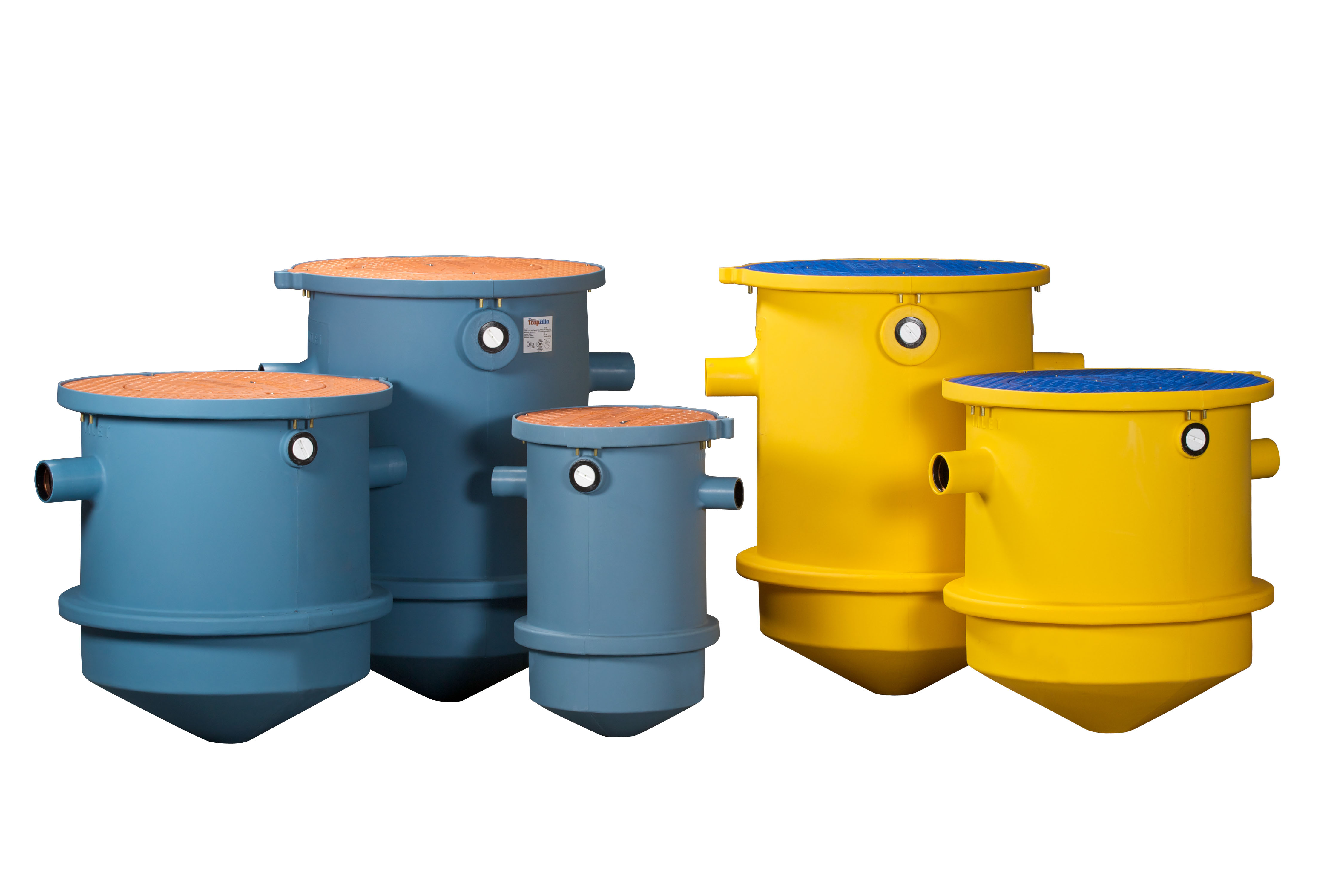
Choosing the right grease seperator size is one of the most important decisions a commercial kitchen makes, yet it is often left to guesswork. Get it right and you capture fats, oils and grease (FOG) reliably, protect your drains and stay on the correct side of your water company's rules. Get it wrong and you face frequent overflows, blocked pipes, bad odours and the risk of enforcement action. The short answer is that a grease trap must be large enough to slow the flow of wastewater so that grease has time to separate and settle, and this depends on how much wastewater your kitchen produces and how quickly. This guide explains how to size a grease trap properly, what standards such as BS EN 1825 cover, and the mistakes to avoid.
Why grease trap size matters
A grease trap works by slowing wastewater down. As the water sits inside the unit, warm grease rises to the top and heavier solids sink to the bottom, allowing cleaner water to pass on to the drain. If the trap is too small for your kitchen, wastewater rushes through before separation can happen, and grease escapes straight into the sewer. Over time this builds up in your pipes and the public network, causing blockages, foul odours and, in many UK areas, potential liability under trade effluent and drainage rules.
An undersized trap also needs emptying far more often, which pushes up your running costs and disrupts service. An oversized trap, on the other hand, wastes space and money and can allow water to stagnate. The goal is a unit matched to your actual kitchen demand, with a sensible margin for busy periods.
What BS EN 1825 covers
In the UK and across Europe, grease separators are commonly designed and selected in line with standards such as BS EN 1825. This two-part standard sets out principles of design, performance and testing, and, importantly for sizing, a method for calculating the nominal size (NS) of a grease separator. The nominal size is a rating that reflects the maximum flow of greasy wastewater the unit can handle effectively.
Rather than picking a trap by guesswork, the standard encourages a calculation based on how your kitchen actually operates. Because interpretation can vary and local requirements differ, it is wise to confirm the approach with your water company or a specialist before committing to a unit.
How to work out the right size
Sizing is about estimating your peak wastewater flow and the characteristics of that water, then choosing a unit rated to cope. The calculation used in standards such as BS EN 1825 typically takes several factors into account.
1. Estimate your wastewater flow
Start with how much greasy wastewater your kitchen discharges during its busiest period. This is influenced by:
- The number of covers or meals served at peak times.
- The type and number of appliances connected, such as sinks, dishwashers, combi ovens and woks.
- How the kitchen operates across the day, including whether you have short, intense service peaks.
2. Account for temperature and grease density
Warmer wastewater keeps grease liquid for longer, which makes separation harder and can call for a larger or better-specified unit. Kitchens that use a lot of hot water, or that rely on high-temperature dishwashers, often need to factor this in. Standards apply correction factors for temperature and the density of the fats involved.
3. Apply the relevant factors and choose a nominal size
The flow figure is then adjusted using the factors set out in the standard to arrive at a nominal size. You select a commercially available separator rated at or above that figure. It is generally sensible to allow some headroom for growth, menu changes or busier trading than expected, rather than sizing to the bare minimum.
Common grease trap sizing mistakes
Even experienced operators get this wrong. The most frequent errors include:
- Buying on price alone. The cheapest, smallest unit that fits under the sink is rarely the right one, and often costs more in the long run through frequent emptying and blockages.
- Ignoring peak flow. Sizing for average daily flow rather than the busy lunch or evening rush leaves the trap overwhelmed exactly when it matters most.
- Forgetting future growth. A trap sized tightly for today may be undersized after a menu expansion or an extra service.
- Overlooking installation constraints. Access for maintenance and emptying, available space and the point of connection all affect which unit is practical.
- Not checking local rules. Requirements can vary between water companies, so a unit that satisfies one area's expectations may not meet another's.
Passive traps, automatic units and larger separators
Grease trap size also interacts with the type of unit you choose. Smaller passive traps suit lower-volume kitchens but fill quickly and need regular manual cleaning. Automatic grease recovery units skim grease off continuously, which can suit busier sites and reduce hands-on maintenance. High-volume operations, or sites discharging large flows, may need a larger separator sized and installed to the relevant standard, sometimes below ground. The right choice balances your flow, your available space, your maintenance capacity and your budget.
When to get a professional assessment
If you are fitting out a new kitchen, refurbishing, expanding your menu or struggling with recurring blockages, a professional sizing assessment is worth the investment. A specialist can survey your appliances and flows, apply the appropriate calculation, check local requirements and recommend a unit that will perform reliably for years, rather than one you have to replace or supplement soon after installation.
How Magneté helps
At Magneté, we help commercial kitchens across the UK choose, install and maintain the right grease management solution for their site. We assess your wastewater flows, advise on appropriate sizing in line with standards such as BS EN 1825, and make sure your setup keeps you compliant and blockage-free. If you are unsure whether your grease trap is the right size, or you are planning a new or refurbished kitchen, book a free strategy call and we will help you get it right first time.